

A Teacher’s Guide to Addressing Bullying in Dance Class
Dance isn’t just a set of movements; it’s an entire world. A world where the body becomes a language and emotions become music. In a dance studio, we learn not only technique but also interaction, trust, and the ability to feel and respect another person’s personal space. But what happens when this sacred space is violated not by a physical push, but by something less obvious—an “air punch, kick”?
This situation caught me off guard when, as a teacher, I started encountering it in various classes. At first, I was shocked and didn’t know how to react. I had to seek out information, reflect, and analyze. This blog is the result of my search and observations, and I hope it will provide support for other teachers who find themselves in a similar position. This is one of the most difficult and painful topics in education, requiring deep thought and a delicate approach.

Facts and Terms
To understand what’s happening on a deeper level, it’s helpful to look at psychological terms. These concepts help us describe behaviors and social dynamics without getting caught up in assigning blame.
Microaggression: These are subtle, often unintentional, actions that cause psychological harm. An “air punch” is a classic example of a physical microaggression. It’s dangerous because it’s easy to dismiss as an “innocent joke.”
Boundary Violation: This is any action that intrudes upon personal space without consent. In dance, where physical contact and proximity are inevitable, boundary violations can be particularly painful.
Group Dynamics: The behavior of one student affects the atmosphere of the entire class. If an aggressor’s actions become the norm, it can create an unhealthy culture. A supportive and proactive response from a teacher, however, helps establish a healthy culture of respect.
“Air Punches”: A Subtle Form of Aggression
Sometimes in a dance class, amid the general creative flow, you can notice one student directing a fist or a foot toward another. I’ve seen teenagers make sharp lunges with their leg—something like an “air kick”—or clench a fist and thrust it forward, as if delivering a blow, but without making contact. These movements don’t literally touch the body, but they carry a clear message. It’s not a random gesture but a directed act, disguised as an innocent “training.” And while it leaves no bruise, the psychological wound can be much deeper.
Hidden Intent: A student who uses “air punches” often does so not with everyone, but with specific “victims.” They might justify it by saying, “I’m just practicing,” but the true motive lies in a desire to dominate and humiliate.
Psychological Pressure: The victim of such behavior feels not physical pain but profound discomfort, embarrassment, and humiliation. They might be unable to understand or articulate what’s happening, because outwardly, it all looks so innocent.
Silent Complicity: Other students in the class often become passive observers. They might not intervene out of fear of becoming the next victim, or due to the “bystander effect,” where everyone assumes someone else will react. Sometimes, they might even feel a slight satisfaction that the object of humiliation isn’t them.
This phenomenon is especially dangerous when the teacher’s back is turned to demonstrate choreography. It’s almost impossible to notice in that moment. And when you turn back to see the victim’s face and the aggressor’s smile, the question arises: what should you do?

The Teacher's Role: How to React and Protect
For a teacher who believes in dance as a space for creativity and self-expression, these situations are a serious challenge. The main task is not only to notice but also to react effectively, creating an atmosphere of safety and respect.
During the class:
Eye Contact: If you notice that a student has become the victim of an “air punch,” make eye contact with them. This is a simple but powerful gesture that says, “I see you. You are not alone.” It helps restore the victim’s sense of reality and confidence.
Support and Proximity: Move closer to the victim under any pretext. This creates a physical barrier between them and the aggressor and gives the victim a feeling of security.
- Redirect the Behavior: If possible, address the behavior immediately without singling out the student. For example, you might say to the whole class, “Remember, we need to be aware of the space around our bodies and the space of others.”
Document the Moment: Remember what happened, even if you can’t intervene immediately. This is important so you can return to the conversation later in a calm setting.
After the class:
One-on-One Conversation: Talk to the victim after class in a private setting. Say directly, “I noticed you were uncomfortable. The way someone was moving was not respectful of your space. What happened was unacceptable. It was not your fault.”
Normalize Feelings: Emphasize that their feelings—discomfort, embarrassment—are completely normal. This helps restore their confidence and trust in themselves.
Working with the Aggressor: From Rules to Understanding
The approach to the aggressor should vary depending on their age and level of awareness.
For younger and less aware students:
Clear Rules: Explain that a dance class is not a place for martial arts. “We’re here to dance, not to practice punches. We respect each other’s space.”
Game-Based Learning: Use games to demonstrate the importance of respecting others’ boundaries. For example, exercises where students have to move close to each other without making contact.
For older and more sophisticated students:
Passive Aggression: This behavior requires a more subtle approach. Older students might pretend nothing is happening, smile, or avoid eye contact. In such cases, direct accusation can lead to defiance.
Group Discussion: Initiate group discussions about the importance of respect, personal boundaries, and class atmosphere. Let the students share their thoughts on what makes them feel comfortable learning.
Individual Work: If the situation doesn’t change, a private conversation with the aggressor is necessary. Without accusations, focus on their behavior and its impact on others. “When you make those gestures, other students feel uncomfortable.”
Dance as a Space of Equality
A dance class is a miniature social model. And just as in any society, it should be governed by equality, respect, and safety.
Safe Space: The physical space of the studio should be a place where every student feels secure.
Respectful Body Language: The body is our instrument, and it should speak a language of respect. Any gesture, even an “air” one, should be thoughtful and carry a positive message.
Equality: Every student, regardless of their skill level, has the right to be respected.
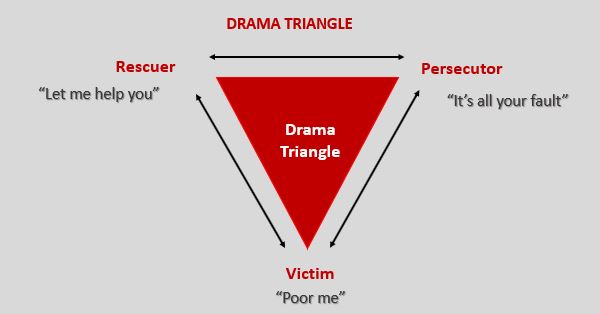
Navigating the Social Dynamic: Escaping the Aggressor-Victim-Protector Triangle
A teacher’s natural instinct is to step in as a protector, immediately labeling one student as the victim and another as the aggressor. While this seems to offer a clear solution, it can unintentionally lock students into rigid roles that are difficult to escape. The aggressor feels shamed and cornered, the victim becomes reliant on external protection, and the class is divided. This approach fails to address the underlying reasons for the behavior and can lead to a cycle of power struggles.
To move beyond this dynamic, we must shift our focus from individual blame to group responsibility and the cultivation of an inclusive class culture. The goal is not to punish an aggressor but to teach them, and the entire class, that such behavior is incompatible with the shared values of our space.
When the Roles Reverse: Empowering the Vulnerable
What if, in a more empowering class environment, a former victim learns to stand up for themselves and uses “air punches” on the original aggressor? This is a moment of profound transformation and a critical teaching opportunity.
Instead of seeing the former aggressor as a new victim and the former victim as a new aggressor, a teacher should view this as a failure of the class’s shared social contract. The behavior is the problem, not the person. Both students need to be guided back to a place of respect and empathy.
The conversation should not be, “Why did you kick them back?” but rather, “In our class, we don’t use these kinds of movements because they make others feel unsafe. How can we find another way to express our feelings or assert our space?”
This approach teaches a powerful lesson:
For the original aggressor: They experience firsthand the discomfort their actions caused, without being labeled a “bad person.”
For the original victim: They learn that retaliation, while understandable, doesn’t align with the class’s values. They are empowered to find a more constructive way to communicate.
For the entire class: They see that a safe space is maintained not by punishing individuals, but by upholding a collective standard of respect.
By refusing to get drawn into the classic triangle, you empower students to own their actions and understand the impact of their choices. You are not a judge, but a facilitator of a healthy social dynamic. The focus is always on the behavior and its impact, not on the person’s identity as a ‘bully’ or a ‘victim.’

Conclusion
Yes, “air punches” are a rare but potent phenomenon. And if you’re a teacher, your responsibility isn’t just to teach movements, but to cultivate a class culture where every student feels safe and valued. This means moving beyond simple labels of “aggressor” and “victim” to focus on the collective values of equality, respect, and shared responsibility. By creating an environment where these principles are non-negotiable, you empower your students to resolve conflict and grow, making dance truly an art, not just a set of movements.
Source:
1. Microaggressions in Dance and Movement
Study exploring nonverbal microaggressions through movement:
An academic study titled “Embodied Nonverbal Microaggressions From the Perspective of Dance/Movement Therapists: Interpretative Phenomenological Analysis” directly addresses this topic. The study explores how dance/movement therapists experience and respond to nonverbal microaggressions in a clinical setting. It highlights how “the body plays in the experience of microaggressions by highlighting how the body responds to these experiences via changes in flow, retreating, and moving the limbs over the center of the body.” While focused on therapy, its findings about embodied nonverbal aggression are highly relevant to a dance class.
Source: Digital Commons @ Columbia College Chicago – https://digitalcommons.colum.edu/theses_dmt/97/
Wider discussion of microaggressions in dance:
An article titled “Calling Out Microaggressions in the Dance Community” provides numerous examples of microaggressions from the perspective of dancers of color, including comments about their bodies, racial stereotypes in choreography, and exclusion.
2. Passive-Aggressive Behavior in the Classroom
Articles from Psychology Today:
“Passive-Aggressive Behavior in the Classroom” and “Passive Aggressive Behaviors in School” are two articles from Psychology Today that define and categorize passive-aggressive behaviors in students. They describe how students “comply verbally but then behave in ways that are subtly disruptive or disrespectful,” which is a perfect fit for the “I’m just practicing” excuse. The articles break down the different “levels” of passive-aggression, from simple procrastination to hidden acts of revenge.
3. Teacher-Student Bullying vs. “Toughness”
Articles from dance publications:
“Is Your Teacher A Bully Or Just Strict? 10 Ways to Tell The Difference” is an article from Dance Magazine that directly tackles this issue. It provides clear red flags to distinguish between a demanding, but ultimately supportive, teacher and one whose behavior is abusive. It discusses repeated targeting of specific students, reprimands that are attacks rather than corrections, and public humiliation as forms of bullying.
Source: Dance Magazine – https://dancemagazine.com/signs-of-a-bad-dance-teacher/#gsc.tab=0
A blog post titled “No Bullying in Dance, Please!” from the organization Dance Aotearoa New Zealand features a discussion among dance professionals. They grapple with the question of where the line is between “toughness/artistic rigour and bullying” and conclude that it often comes down to how people are managed and spoken to.
- Source: Dance Aotearoa New Zealand – https://danz.org.nz/no%20bullying%20in%20dance%20please
Related posts:
No related posts.