
A Personal Reading Challenge Across Four Languages
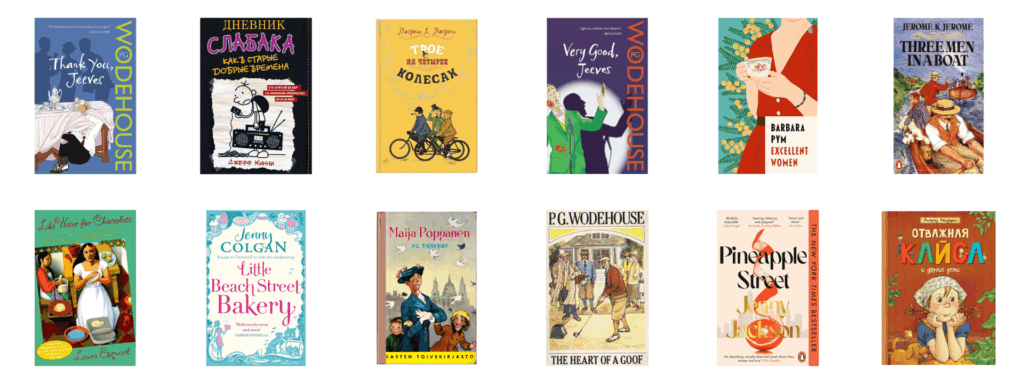
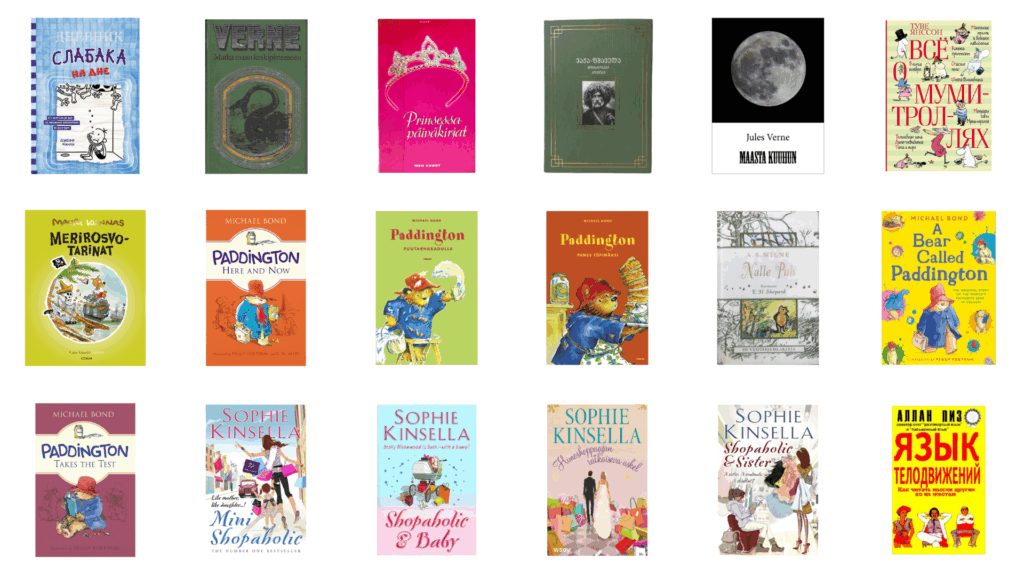
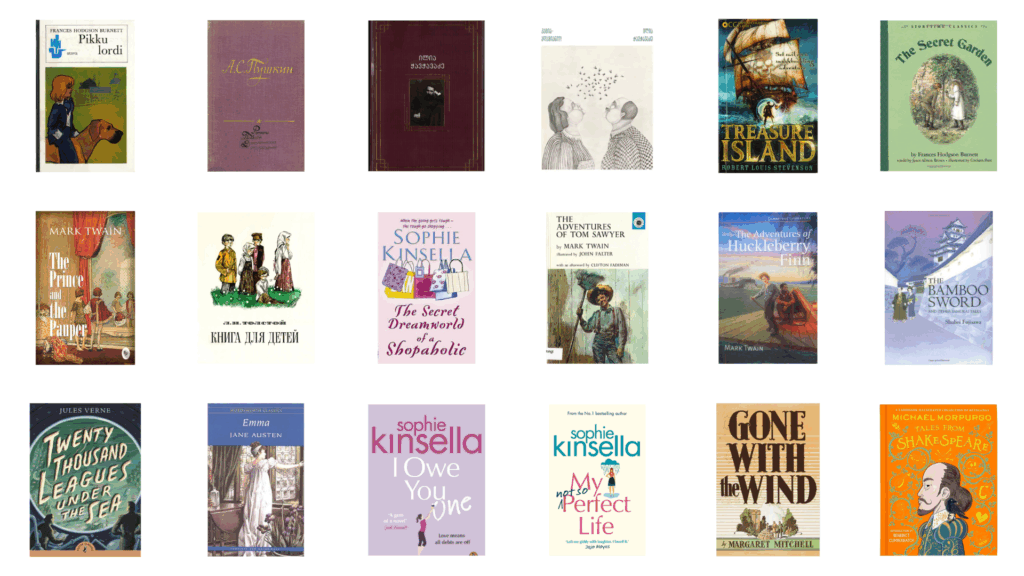
At the end of 2024, I quietly set myself a challenge: to read 52 books in one year—one book per week. Simply to immerse myself in language, story, and solitude. I knew I was chasing more than a number. I was chasing voices, perspectives, and the quiet thrill of turning pages with intention.
I’d already been reading regularly, but I wanted structure—a rhythm, a personal commitment. Ten months later, I reached my goal. What began as a numerical target transformed into a deeply personal journey of growth, creativity, and joy.
For a while, I kept pace easily. Classics around 250 pages, favorite novels up to 450—I could finish them within a week. But when I picked up multi-volume collections or hefty novels like Gone with the Wind (800+ pages), and others, I hit a wall. The one-week rule started to feel more like a constraint than a guide.
So I adjusted. Instead of rigidly finishing one book per week, I broadened my goal: to read 52 books across the 52 weeks of 2025. This gave me space to savor longer works without losing momentum.
Now, I’d love to share more about this journey—my reflections, lessons learned, and practical tips for anyone who wants to read more consistently, whether it’s a book a week or simply more than before.
The many faces of reading
Reading, I discovered, is never just one thing. It can be light or heavy, fast or slow, joyful or sorrowful. Some books flew by in a single sitting — read in three hours on one breath. Others, though similar in length, demanded rereading nearly every sentence. I laughed out loud with some stories, and others brought a sadness deeper than my own experiences. Even the books I didn’t enjoy taught me something — about taste, timing, and the importance of letting go.
This challenge helped me refine my literary taste. I learned to give each book a fair chance — 50 pages to engage me. If it didn’t spark joy by then, I moved on. I let go of 8-10 books this year, and that decision felt empowering. It taught me to choose wisely, to ask librarians for recommendations, and to trust my instincts.
That’s why using the library instead of buying every book turned out to be such a smart and liberating choice—it gave me the freedom to explore widely without pressure or regret.
I’ve always preferred printed books. There’s something grounding about the weight of a novel in your hands, the scent of paper, the rustle of a page turned. Finnish libraries made this tactile joy incredibly accessible. Their catalogues are vast, multilingual, and surprisingly up-to-date. Whether I was hunting for a classic, a new release, or a niche nonfiction title, I rarely walked away empty-handed.
Less scrolling & more reading everywhere
Reading gently pulled me away from social media. It became a nourishing habit — one that replaced endless scrolling with meaningful stories. I did notice, though, that I sometimes lost touch with the present moment. Fiction can be immersive, and time flies when you’re reading. But it also made me more reflective, more imaginative, and more grounded.
I read in every imaginable setting:
- On the bus, commuting between work, school, and hobbies
- Cozy mornings in bed
- Between classes and during thesis breaks
- Walking to the grocery store
- At the beach on summer vacation
Most of my reading happened while commuting — a realization that surprised me. Sometimes, I missed the beauty of the Finnish sky because I was deep in a fictional world. But that trade-off felt worth it.
September was my most productive month — I read nine books! Reading became a ritual: a few pages in the morning, a chapter before sleep. It wasn’t a task. It was a rhythm.
Reading in four languages and what it gave me
One of the most rewarding aspects of this challenge was reading in four languages: English, Finnish, Russian, and Georgian. It wasn’t just a reading goal—it became a full immersion into language itself. Switching between languages kept my mind sharp and enriched my vocabulary in ways I hadn’t anticipated.
I discovered the powerful beauty of original texts, where the rhythm, nuance, and emotion of the story felt more alive than in translation. The narratives began to sing—charming melodies woven through words—and each story unfolded with its own unique cadence.
This challenge gave me more than a number. It gave me:
- A deeper connection to words and silence
- A reawakened imagination
- A brighter mood and lighter heart
- Creative fuel for my work in music, movement, and teaching
Books became quiet companions. They helped me slow down, reflect, and reimagine.
Tips for reading one book per week
Here’s what worked for me:
- Choose classics under 250 pages
- Indulge in favorite romance novels — even if they’re 500 pages, you’ll read them in one breath
- Avoid multi-volume collections; they’re psychologically daunting
- Read while commuting
- Always carry a book in your bag or pocket
- Borrow several books at once from the library
- Don’t force yourself to finish unpleasant books — give them 50 pages, then move on
- Follow your mood and choose books that make you happy, curious, or inspired
- Make reading your own joyful ritual — a moment between moments
Final reflection: More than a Goal
Was it possible? Yes. Was it easy? Yes—but only until I hit the multi-volume tomes. Still, it was deeply rewarding. This journey reminded me that reading isn’t about rigid schedules or checking boxes. It’s about curiosity, rhythm, and the quiet joy of discovering stories that move you.
If you’re thinking of starting your own reading challenge, know this: it’s absolutely possible. And it’s absolutely worth it. Just follow your curiosity. Choose books you love, stories that excite you, and voices that make you feel something.
Wishing you joyful reading, xoxo
p.s. Virtual bookshelf
If you’re curious about the books I’ve read, you can check out my Instagram account where I share my reading journey: @booksbetweenmoments