Beauty in dance class

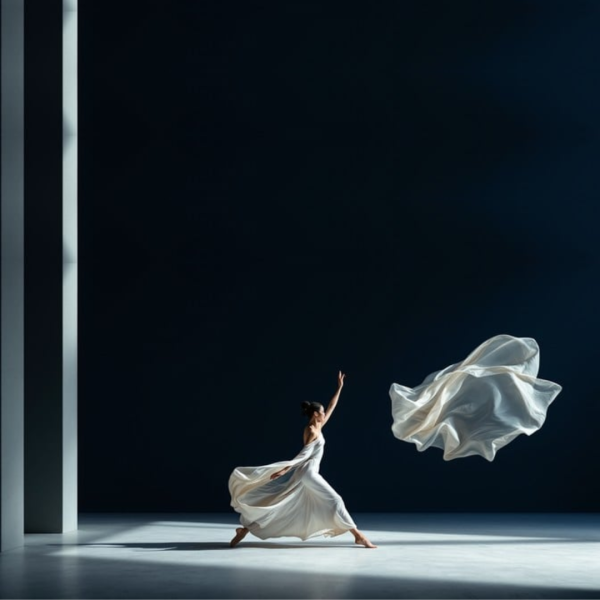
In my journey as a dance teacher, I have come to understand that beauty is not merely an aesthetic ideal — it is a living force that shapes movement, intention, and connection. Beauty in dance is not confined to symmetry or perfection; it is found in inner motivation, emotional resonance, and the dignity with which a dancer moves.

And yet, in many educational environments in Finland, I have witnessed a growing discomfort with the language of beauty — a tendency to silence it, to treat it as taboo. The word beautiful is often avoided, as if naming beauty risks exclusion or elitism.

While studying for my master’s degree, I encountered a module focused on art and beauty in the arts. There, I finally found the articles and ideas I had longed for in my earlier studies — and I was able to bravely formulate questions that had remained unspoken until then:

  • Can beauty be celebrated without excluding others?
  • Is the suppression of aesthetic language a loss for artistic education?
  • How do we protect emotional safety without discouraging excellence or authenticity?

The Silence Around Beauty

In Finnish schools and universities, students are often raised with a strong emphasis on emotional safety and inclusivity. While these values are essential, they sometimes manifest as a resistance to aesthetic judgment. I have seen students protest against terms like beautiful or elegant, fearing that such labels might exclude or rank them. In these settings, even awkward or unrefined movement is celebrated — not as a stage of growth, but as a final form. The desire to dance beautifully is sometimes met with suspicion, especially if it comes from students who naturally move with grace.

What’s more troubling is that this suspicion toward beauty and natural talent can arise not only from peers, but even from teachers. In Finland, it is widely accepted that one can become a dance teacher without having been a dancer first. While this opens doors to diverse pedagogical perspectives, it can also create tension — especially when a student’s movement surpasses the teacher’s own technical or expressive capacity.

In such situations, an emotionally immature teacher may respond with defensiveness or subtle discouragement, rather than nurturing the student’s gift. The teacher might begin to judge — or even assign low grades — to a student who expresses too much beauty in their movement, misinterpreting it as showing off or trying too hard.

But often, what is being expressed is not performance or pretense — it is natural talent, a glimpse of the student’s inner world. It is not about seeking approval, but about authentic expression.

This dynamic can suppress the very qualities that dance education should celebrate and cultivate: elegance, harmony, aesthetic intuition. When beauty is punished instead of welcomed, students may begin to doubt their own expressive power. They may shrink, hesitate, or disconnect from the very source of their artistic potential.

As educators, we must be careful not to confuse authenticity with arrogance, or natural grace with vanity. Our role is to recognize and uplift the beauty that emerges — not to silence it out of discomfort.

When beauty becomes a threat rather than a shared aspiration, the classroom loses its potential to be a space of artistic growth and emotional resonance. We must be willing to honor the beauty we see, even when it challenges us — especially when it reminds us of what dance can truly be.

Beauty in philosophy

In philosophical discourse, beauty has never been a simple or neutral concept. Beauty is conceptually complex — it invites questions not only of what it is, but why it matters and how we speak of it. The question persists: not because beauty is easy to define, but because it refuses to be ignored. 

Beauty is not just a surface-level aesthetic judgment, but a concept tied to morality, truth, and pleasure. Some thinkers argue that beauty should serve ethics, others truth, and still others emotional or sensory enjoyment. This diversity of purpose shows that beauty is not trivial — it is deeply embedded in how we understand and relate to the world. To speak of aesthetics is not to chase perfection, but to ask what moves us, what awakens us, what makes us feel alive.

Moreover, the way we speak about beauty is often emotional rather than informational. As Ogden and Richards note, when we call something beautiful, the word “beautiful” is rarely used with strict definition. Instead, it functions emotively:

“When something is called beautiful, the aim is to express and evoke experiences, emotions, and attitudes — not to transmit information.’’ We are expressing and evoking experiences, emotions, and attitudes. This means that beauty is a language of connection, not exclusion.

Historically, even the Greek term kalos — used by Plato and others — did not refer solely to aesthetic beauty. It encompassed moral nobility, social approval, and instrumental goodness. To call something kalos was to affirm its value, its worthiness, its excellence — whether in form, character, or purpose.

So when we speak of beauty in dance, movement, or expression, we are not imposing a rigid standard. We are engaging in a human tradition of recognizing resonance, grace, and meaning. It invites you to dwell within it — to explore how beauty lives in movement, in meaning, and in the quiet space between perception and truth.

To silence the word
beautiful is to silence a part of our emotional vocabulary — a part that helps us affirm, inspire, and uplift. To speak of beauty is to speak from the heart — to connect, to inspire, to affirm. It is not about ranking or excluding, but about recognizing resonance. When we deny ourselves the language of beauty, we risk flattening our emotional and aesthetic experience.

In dance, in art, in life — beauty is not a standard to impose, but a possibility to explore. And every person deserves the chance to discover what beauty means to them, and to be told — sincerely — that they are beautiful in movement, in presence, in being.

In educational settings, especially in the arts, avoiding the language of beauty out of fear of exclusion can unintentionally exclude those whose expression is naturally beautiful. It can discourage students from believing in their own aesthetic power. 

”If a student does not allow themselves to believe they are capable of dancing beautifully, that’s when it starts to be tricky.”

Affirming Beauty, Building Confidence

I discovered that speaking openly and sincerely about aesthetic beauty — and the beauty within each student — is not only crucial, but a powerful tool for developing technique and fostering artistic growth.

Whether working with toddlers or elderly adults, I’ve seen how naming and celebrating beauty with full heart and honesty creates a space of trust, inspiration, and transformation.

When students feel seen not just for their effort, but for the beauty they carry and express, their movement becomes more intentional, connected, and alive. Beauty, when spoken with sincerity, becomes a mirror — reflecting back to the student their own potential, dignity, and worth. It affirms not only what they do, but who they are becoming through the dance.

In this sense, dance becomes a powerful tool for building self-confidence. It allows students to see themselves not through criticism or comparison, but through the lens of possibility — recognizing how powerfully they resonate in others, emotionally, gracefully, and meaningfully. It becomes a mirror of all the wonderful things they already are, and all the potential they hold within — waiting to be expressed, shaped, and celebrated.

Most importantly, I believe that when movement arises from inner beauty — from the desire to express oneself elegantly, softly, sharply yet gracefully, boldly-beautifully, lightly, or in any authentic way — it carries a unique power.

When a student knows and believes they are capable of dancing beautifully or elegantly, and feels safe to accept and express that belief socially, their movement gains inner motivation. It becomes charged with meaning, intention, and emotional resonance. That’s when dance transcends technique and becomes art.

But if a student does not allow themselves — or is not allowed, accustomed, or supported by their environment — to believe in their own beauty, to claim the possibility of dancing beautifully, things become complicated. The movement may lose its soul. The dancer may hesitate, shrink, or disconnect from their own expressive potential.

This is why it’s so important to create spaces where beauty is not taboo, where students are encouraged to recognize and celebrate their own aesthetic power — not as superiority, but as authenticity.

The Power of Language in Movement

I discovered the transformative power of language when I began teaching. When I used words like gracefully, dignified, respectfully, bravely, beautifully, elegantly, I saw immediate shifts in posture, presence, group dynamic and intention. Students began to move not just with their bodies, but with their spirits.

I cannot teach Georgian folk dances without guiding my students into a certain inner dialogue — a way of speaking to themselves through movement. Each gesture, each step, must be accompanied by an internal voice that says, for example: Hold your hand — gracefully, with dignity, with respect, with courage, beautifully, elegantly.

This inner talk is not decoration — it is the soul of the dance. Georgian folk dance is not just about steps and formations; it is about embodying values, expressing character, and channeling cultural memory. Without this internal guidance, the movement risks becoming empty — technically correct, perhaps, but emotionally disconnected.

When students learn to dance with this inner voice, they begin to move not just with their bodies, but with their spirit. They carry the pride, grace, and strength of generations. And that is when the dance becomes truly alive.

Interestingly, when I was teaching the Finnish folk dance sottiisi to upper secondary school students (30 student per group) I noticed something remarkable. After introducing the basic steps and pairing them for partner dancing, I began to use words like gracefully, with dignity, respectfully, bravely, beautifully, elegantly.

To my surprise, these untrained teenagers — many of whom had never danced before — began to move in a noticeably more refined and expressive way. Their posture shifted, their gestures softened or sharpened with intention, and their presence on the dance floor became more grounded and radiant.

This experience affirmed something I deeply believe: Words have the power to transfer essence. They don’t just describe movement — they shape it. They awaken something within the dancer, guiding not only the body but the spirit. When we speak of beauty, dignity, and elegance, we invite students to embody those qualities. We give them permission to believe in their own expressive potential.

Even in kindergartens, I’ve seen how children are already attuned to the desire to dance beautifully. They crave affirmation from the teacher. They proudly show off their beautiful tops, shoes, socks, or movements — whatever they feel is special in themselves or in others. And I’ve noticed how they light up when a movement or dance is described as beautiful.

It’s as if they instinctively understand that beauty is something to strive for, something to share. This early sensitivity to aesthetic affirmation reveals just how deeply rooted the language of beauty is in our emotional development.

In these moments, empowering through beauty is not imposing a standard — it’s meeting children exactly where they are. It’s recognizing their natural desire to be seen, celebrated, and connected through movement. And it’s giving them the language to express not only what they do, but who they are becoming.

I also believe that guiding through words is a safe and inclusive practice. My intention is never to impose a fixed standard of beauty or say, “Follow exactly this, and only then you will be beautiful.” Instead, I invite my students to dive inward, to explore their own unique essence of beauty, value, and expression.

Teaching dance, for me, is like guiding someone through an inner-world maze. I might say, “Now turn right toward beauty,” or “Now left toward curiosity, elegance, or strength.” These verbal cues are not commands — they are invitations. They help students navigate their own emotional and aesthetic landscape, discovering what feels true and powerful for them.

In this way, I believe I preserve inclusivity. Each individual remains free to discover their own inner power, without being judged, stereotyped, or forced into someone else’s mold. Beauty becomes a personal journey, not a performance for approval — and that, I believe, is the heart of meaningful dance education. 

Words to evoke beauty, feeling, and presence:

  • Gracefully
  • Elegantly
  • With dignity
  • Softly
  • Boldly-beautifully
  • Delicately
  • Powerfully
  • Sensitively
  • Majestically
  • With pride

Words to guide intensity, rhythm, and flow:

  • Sharply
  • Fluidly
  • Explosively
  • Controlled
  • Grounded
  • Lifted
  • Suspended
  • Quickly / Slowl

Words to shape the dancer’s inner narrative:

  • With respect
  • With courage
  • With joy
  • With longing
  • With mystery
  • With clarity
  • With playfulness
  • With strength

Conclusion: Beauty as Permission

When students are allowed — socially and emotionally — to believe they are capable of dancing beautifully, their movement gains inner motive. It becomes intentional, resonant, and alive. But when they are denied that permission, or taught to fear it, their expression may shrink.

As a teacher, I see it as my responsibility to restore beauty to its rightful place in dance education — not as a standard to impose, but as a possibility to explore. And crucially, this beauty is not external. It is not about appearance, symmetry, or meeting someone else’s definition of grace. It is about the dancer’s inner world — their emotional truth, their personal rhythm, their unique resonance.

Guiding students with words toward their inner beauty is both empowering and technically transformative. It helps them move with greater intention, emotional depth, and authenticity. This approach does not seek to shape dancers into a fixed mold of what “looks beautiful.” Instead, it invites each student to discover what feels beautiful — to them.

By awakening their inner world through language, we help students connect movement to meaning — not to mimicry. This is where artistry begins. This is where transformation happens: not through correction, but through connection.

True inclusivity means meeting each student where they are, and helping them uncover the grace, strength, and curiosity already within them. When beauty is spoken with sincerity — and understood as something internal — it becomes a mirror. Not of perfection, but of potential. Not of appearance, but of dignity and worth.

Beauty should be celebrated and embraced — not silenced or tabooed. It is not elitist. It is not exclusionary. It is a language  of the soul,  of connection, a tool for healing, and a pathway to artistic growth. And every dancer — regardless of age, experience, or background — deserves to hear it spoken with sincerity.

In my own experience, the dance education environments I encountered in Finland tended to treat beauty as a kind of taboo. Aesthetic aspiration was often met with discomfort or suspicion, and the language of grace and elegance was rarely embraced. However, I recognize that this may not reflect all educational spaces in Finland — it is simply my experience, shaped by the particular places where I studied.

This realization doesn’t invalidate what I felt; rather, it deepens my understanding. It reminds me that educational cultures vary, and that part of my work as a teacher is to help create the kind of environment I once longed for: one where beauty is not feared, but welcomed; not silenced, but spoken with sincerity.

Let us create spaces where beauty is not feared, but welcomed. 
Where movement is not judged, but understood. 
Where every student is free to dance not just with their body — but with their soul.

References:

Estetiikka: Kauneus. Tieteen termipankki. https://tieteentermipankki.fi/wiki/Estetiikka:kauneus 

Kauneus. Filosofia. https://filosofia.fi/fi/ensyklopedia/kauneus

Mikä on taide? Pekka Hannula. https://hannula.art/mita-on-taide