
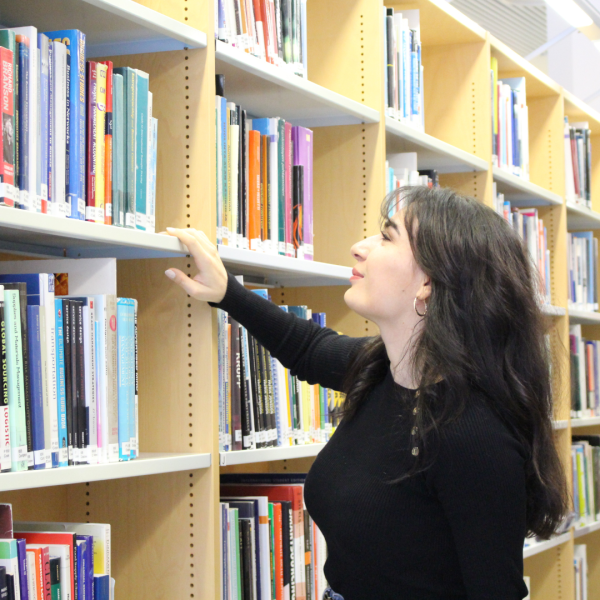
Most reading challenges begin with a plan — a list, a goal, a promise to become a better version of yourself by December. Mine didn’t. I started 2025 with nothing more than curiosity, a library card, and a desire to read books that felt joyful, positive, or adventurous. No pressure, no transformation agenda.
And yet, somewhere between quiet evenings, bus rides, school and work breaks, and library visits, I ended up reading 75 books. Not because I chased a number, but because reading quietly became the rhythm of my year — a steady, comforting habit that shaped my days without demanding anything from me. Here’s what that journey taught me.
Reading in Five languages became natural — almost invisible
People often describe switching languages like shifting gears. But for me, it never felt like switching at all. Whether I was reading in Finnish, English, Russian, or Georgian, the story stayed the story. If anything, it showed me that my language levels in these four languages are strong enough that the language itself becomes almost invisible — simply the air around the narrative. Sometimes the biggest improvement is the one you barely notice.
In November, I added my fifth language: Spanish. I’m still at a basic level, but I’ve already begun reading in it — not simplified texts, but real literature, starting with Astrid Lindgren. I’m moving slowly and intentionally, but with genuine excitement. And although Spanish requires more effort at this stage, that effort feels meaningful. Curiously, even in Spanish, the story still feels like the story — the language wraps around it rather than standing in the way.
Every new language opens another window into the world, another way of thinking, another layer of cognitive strength.
What Reading 20,000+ Pages in Five Languages Did for Me
When I look back at my reading year, the number itself still surprises me: more than 20,000 pages and over five million words, spread across five languages. I didn’t set out to achieve anything impressive — I simply followed my curiosity, one book at a time. But this multilingual reading rhythm quietly reshaped me.
Reading in multiple languages didn’t just maintain my skills — it deepened them. I developed a sharper intuition for grammar and sentence patterns. Word choice and style began to feel natural, almost instinctive. My reading speed increased, and comprehension became smoother. I built a stronger “ear” for each language, even when I wasn’t speaking it.
Huge expansion of natural vocabulary: Five million words leave a mark. I absorbed everyday expressions, dialogue, and emotional language. I picked up topic‑specific vocabulary from different genres. Common words became automatic — I didn’t have to “translate” anymore. It wasn’t about memorizing new words. It was about living inside them.
Stronger focus – and far less screen time. Reading became my antidote to distraction. I scrolled less and got pulled into my phone less often. I spent more time in deep focus, actually engaging with something meaningful. My days felt fuller, not wasted.
Books gave my time a shape — something scrolling never could.
Emotional and mental support. This year, books became a kind of emotional home. Joyful and adventurous stories lifted my mood. Reading offered a safe, positive inner space I could step into anytime. It helped me regulate my emotions and gave my mind breaks from school, work, hobbies, negativity. It wasn’t therapy — but it was nourishment.
Cognitive benefits i could feel. Long‑form reading across multiple languages is a workout for the brain. My concentration improved. Imagination and mental imagery became stronger and more vivid. I practiced holding complex narratives, characters, and timelines in my head — and got better at it. It felt like my mind became more flexible, more resilient, more awake.
Identity and habit. Somewhere along the way, reading became part of who I am. I became unmistakably “a reader.” Built a sustainable habit: a book a week, often more. Proved to myself that I can commit to something quietly, gently, and consistently. This wasn’t discipline. It was identity.
All together, this reading year revealed a version of me that is thoughtful, curious, self‑guided, and quietly committed to becoming better — one book at a time.
Joyful books don’t transform you — they support you
Years ago, I watched videos about how reading 52 books changed people’s lives. Looking back now, I don’t feel a big transformation. I didn’t experience a dramatic “before and after.” Instead, I felt something gentler:
- happy books made my days lighter
- adventures gave me energy
- positive stories kept a little warmth inside me.
- And children’s classics charged, tuned, and enriched me for my work with kids
It wasn’t a life-changing explosion. It was emotional nutrition — small, steady, and real.
Reading on the bus, during brakes at school or work, before bed, or during quiet moments made my days feel fuller. Instead of scrolling, I was learning, finishing things, moving forward.
Books gave my time a shape. A book a week became a natural rhythm. When I finished early, I kept going simply because it felt good. Reading became a companion — a habit that asked for nothing but always gave something back.
Planning is overrated — having options is everything
At first, I thought I needed a plan. But when you sometimes finish a book in a single day, planning becomes overwhelming fast. So I learned something simple:
I don’t need a plan. I need a stack.
Every library visit ended with 6–10 books in my bag — not because I’d read them all, but because I wanted options. Something light, something deep, something joyful, something I could abandon guilt‑free.
It made reading feel like an adventure instead of a task.
The cognitive power of multilingual reading
My multilingual reading life has become one of the most transformative parts of my year. What began as a simple habit — picking up books in the languages I know — slowly revealed itself as something far more powerful. The intensive engagement of reading across languages isn’t just about expanding vocabulary. The “load” I feel when moving from Finnish to English, from Russian to Georgian, or now to Spanish, is a genuine cognitive workout. Every shift strengthens attention, memory, problem‑solving, and adaptability. It’s not an exaggeration to say that multilingual reading is reshaping my mind in a deep, foundational way.
It’s easy to imagine multilingualism as a collection of words, grammar rules, and dictionaries. But the reality is much more profound. Consistent engagement across languages rewires the brain itself. It sharpens focus, increases cognitive flexibility, strengthens recall, and builds a long‑term cognitive reserve that supports brain health far into the future. The effort I sometimes notice isn’t a sign of struggle — it’s a sign of growth. It’s the brain adapting, becoming more efficient, more agile, more awake.
This year, my multilingual journey expanded in ways I didn’t plan. What started as reading in four familiar languages grew into something larger, something that reshaped how I experience stories and how I understand myself. Reading across five languages didn’t just broaden my vocabulary; it broadened my thinking. It sharpened my intuition for grammar and rhythm, strengthened my ability to hold multiple linguistic systems at once, and deepened my connection to different cultures and ways of seeing the world.
And next year, I’ll continue in the same spirit: a book a week, or more if it happens. No strict plans. No pressure. Just curiosity, library shelves, and the joy of discovering something new. Because multilingual reading isn’t just a habit — it’s a way of expanding the mind, one story at a time.
Conclusion
When I started the year, I didn’t expect any of this. I wasn’t chasing numbers or trying to reinvent myself. I just wanted joyful books, positive stories, and a chance to keep my languages alive.
But reading 20,000+ pages across five languages did something deeper. It strengthened my mind, supported my emotions, sharpened my focus, and shaped my days in a way that felt meaningful.
It wasn’t loud or dramatic. It was quiet, steady, and real — the kind of transformation you only notice when you pause and look back.
After a year like this, I can’t recommend reading enough. Not as a challenge, not as a duty, not as something to measure — but as a gentle, steady way of giving your mind and heart a place to grow. Books have carried me through languages, moods, seasons, and moments when I needed a little more light.
I wish the same for anyone who feels even a spark of interest. I hope you reach toward the bookshelves — in libraries, in bookstores, in your own home — and find the stories that speak to you. The ones that lift you, steady you, surprise you. The ones that add wings.
Because somewhere in those pages, quietly waiting, is a story that will meet you exactly where you are — and carry you somewhere new.
Related posts:
No related posts.