

The Joyful Spirit of Georgian Folk Tradition
Georgia is a land of mountains, wine, and music—but perhaps nothing captures its soul more vividly than its folk dances. Each region has its own unique style, reflecting local traditions and character. Among them, Acharuli, from the Black Sea region of Adjara, stands out as one of the most joyful and humorous dances in the Georgian repertoire.

Origins of Acharuli
Acharuli was born in Adjara, a southwestern Georgian region known for its seaside charm and lively culture. Unlike martial dances such as Khevsuruli or the romantic elegance of Kartuli, Acharuli embodies festivity, flirtation, and humor. Traditionally performed at weddings and community gatherings, it reflects the cheerful lifestyle of Adjarians and their love for celebration.
While Acharuli is joyful, its joy is hard-won. The dance often begins with a solo performer—either a girl or boy—who enters cautiously, “spying” or checking the surroundings. This opening symbolizes the community’s vigilance, ensuring the space is safe from enemies.
Only after this careful inspection does the dance unfold into lively celebration, representing the relief and happiness of being able to gather without fear. In this way, Acharuli is not simply festive—it is a ritual of resilience, a a reminder of the Georgian people’s courage, untiring energy, and joyful spirit. Through dance, they affirmed life itself, and in celebrating, they were symbolically winning against hardship.
Where some cultures respond to hardship with a philosophy like Hakuna Matata—“no worries”—Georgians have historically answered with dance and song. It’s not just entertainment; it’s a way of resisting despair, affirming identity, and transforming struggle into celebration.
In Georgian tradition:
Dance becomes a declaration of survival. Even in times of danger, Acharuli and other folk dances remind people that joy can be reclaimed.
Song is equally vital. Polyphonic singing, recognized by UNESCO as intangible cultural heritage, often carried communities through hardship, binding them together in harmony.
Together, dance and song are not escapism but acts of defiance—a way of saying: we are still here, we still celebrate life, and through this joy, we endure.
So while one nation says Hakuna Matata, Georgians answer with rhythm, movement, and harmony. Their philosophy is lived through art: to dance and sing even when times are hard, because joy itself is a victory.
Dance Style and Movements
What makes Acharuli so captivating is its playful energy.
- Dancers use soft, flowing gestures rather than sharp, militaristic moves.
- The choreography often depicts men and women teasing and flirting, with exaggerated gestures.
- Group dynamics are central—dancers interact with one another, creating a lively atmosphere that mirrors community togetherness.
This lightheartedness makes Acharuli a refreshing contrast to other Georgian dances that emphasize heroism or solemnity.
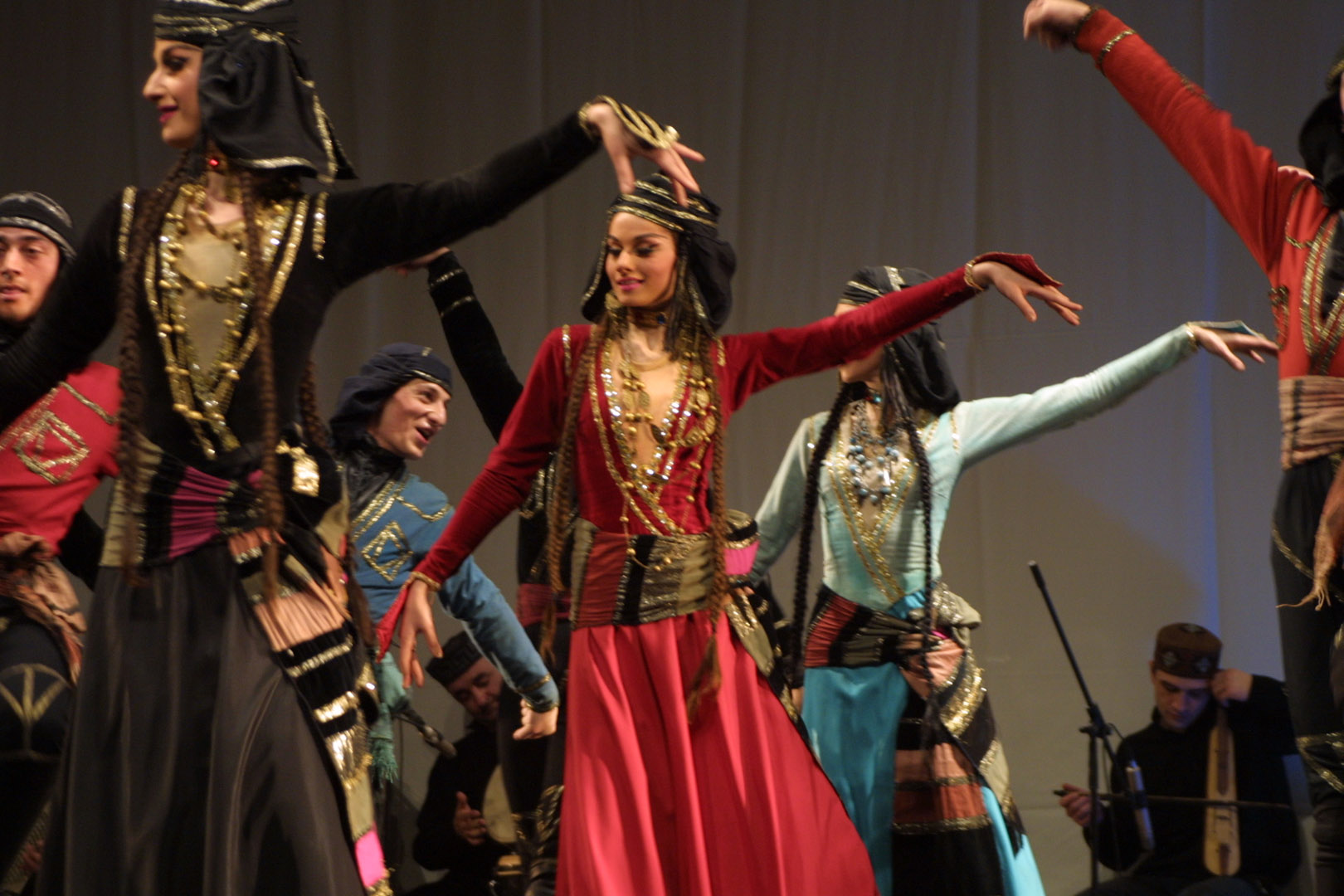
Most Georgian dances emphasize strong footwork, powerful leaps, or upper body posture. Acharuli is the only one where the wrists are actively used, which immediately sets it apart. The flowing wrist movements add softness and elegance, reinforcing Acharuli’s reputation as a dance of femininity, grace, and joy.
The wrists create delicate lines that extend the dancer’s energy outward, almost like ornaments in motion — echoing the decorative embroidery and flowing fabrics of traditional costumes.
Costumes and Symbolism
Costumes in Acharuli are inspired by the traditional attire of the Adjara region. Each Georgian dance has distinct clothing that reflects the life and culture of its origin.
Traditional clothes and ornaments in Acharuli symbolize regional identity, joy, and elegance — they reflect the festive spirit of Adjara while preserving cultural heritage.
- Women wear brightly colored dresses with flowing skirts, often decorated with embroidery. Women’s costumes emphasize flowing fabrics and graceful silhouettes, highlighting the dance’s themes of femininity, grace, and elegance.
- Men wear lighter versions of the traditional chokha, emphasizing festivity,
symbolizing strength and pride, while still complementing the playful character of the dance.
Traditional Georgian costumes often feature ornamental embroidery that carries cultural motifs, such as geometric shapes or floral designs, symbolizing harmony, nature, and continuity of tradition. Ornaments such as belts, sashes, or headpieces add sparkle and emphasize the celebratory mood. They also connect dancers to the ritual and ceremonial aspects of Georgian culture.
Flowing skirts and decorative elements are not just aesthetic — they highlight regional identity, enhance the visual rhythm of the dance, enhancing the celebratory mood of the performance.
Acharuli is described as flirtatious, light-hearted, and contagious in its happiness. The costumes and ornaments amplify this symbolism:
- Bright colors = joy and festivity
- Flowing fabrics = grace and elegance
- Traditional motifs = cultural pride and continuity
Together, they transform the dance into a living expression of heritage, celebration, and artistry.
Music and Rhythm
The dance is accompanied by cheerful folk melodies, performed on traditional Georgian instruments such as the panduri (three‑string lute), doli (drum), gudastviri (bagpipe), and garmoni (accordion). Each instrument adds its own color, weaving together a soundscape that is both festive and deeply rooted in Georgian heritage.
The music is evenly metered, giving the dance a steady foundation while leaving space for expressive variation. The lively tempo encourages improvisation, allowing dancers to embody spontaneity and joy. At the same time, the rhythm carries symbolic weight: it mirrors the transition from caution to celebration, reinforcing the dance’s narrative arc. What begins with vigilance and restraint blossoms into exuberant movement, underscored by music that transforms tension into triumph.

Acharuli Today: a living force
Today, Acharuli remains a living force in Georgian culture. Its rhythm and stylistic movements are embedded in every Georgian, appearing naturally at weddings, celebrations, or even casually in restaurants as a spontaneous expression of happiness. Georgians love to dance whenever the spirit moves them, and Acharuli’s movements—simple, noble, and dignified—make it accessible for people of all ages, whether performed solo, in duets, or in groups.
Beyond everyday life, Acharuli is also showcased by renowned ensembles such as Sukhishvili and Erisioni, who bring its story to international audiences. While spectators are captivated by its joyfulness and vibrancy, understanding its deeper meaning adds richness: Acharuli is not only a dance of celebration, but also a dance of vigilance, resilience, and triumph. It reminds us that joy, when hard-won, becomes a powerful expression of identity and endurance.
conclusion
Acharuli is more than a dance—it’s a living expression of Georgian identity. It embodies the playful spirit of Adjara’s people, their love of community, and their ability to celebrate life with humor and warmth. For anyone exploring Georgian culture, Acharuli offers a delightful reminder that tradition can be both profound and fun.
Related posts:
No related posts.