Chapter 1: Origins and Cultural roots of Jazz dance
This is the first part of a five-part blog series inspired by the book Jumping into Jazz by Minda Goodman Kraines and Esther Pryor. While jazz dance is widely recognized and celebrated, diving deeper into its history through literature offers more than just knowledge—it opens the door to creative freedom.
Understanding the origins of jazz dance, the reasons behind specific movements, and the evolution of styles allows dancers and choreographers to create with intention. It’s not just about technique; it’s about connecting with the people and stories behind the art form. By learning about the pioneers and cultural influences that shaped jazz dance, we become more attuned to our own humanity and artistic vision. This journey is both educational and deeply personal.
The book Jumping into Jazz presents the history of jazz dance in a broad and fascinating way. Through its various chapter headings, readers are introduced to a rich world of jazz—covering music, dance, film, influential individuals, and the social phenomena that have shaped jazz dance, its history, its experience, and its visual expression.
This multidimensional approach allows dancers and enthusiasts to understand not only the technical aspects of jazz dance but also the cultural and human forces behind its evolution. It’s a reminder that jazz dance is deeply rooted in lived experiences, artistic innovation, and social change.

Jazz Dance and Music: Intertwined Origins
Jazz dance and jazz music—two vibrant forms of expression—began to develop in the 19th century, each echoing and influencing the other’s growth. Both were originally created and performed by African Americans, whose cultural heritage and resilience laid the foundation for what would become a global art form.
During the era of slavery in the United States, enslaved Africans were prohibited from speaking to one another while working. Yet, their love for music and dance found a way to survive. Singing was allowed, so they created work songs—rhythmic chants accompanied by matching steps and hand claps. These songs were not only a form of communication but also a way to preserve identity and spirit through rhythm and movement.
As the 1800s progressed, white Americans began to take notice of the music and dance created by enslaved people. This led to the rise of the Minstrel Show, a popular entertainment format in the 19th century, where white performers painted their faces black and exaggerated their lips in caricatured portrayals of African Americans. These performances both mocked and popularized Black music and dance, spreading it to wider audiences while distorting its origins.
After the Fugitive Slave Act of 1859, many African Americans moved north, where they began to replace white performers in minstrel shows. Later, some even traveled to Europe, introducing early forms of jazz music and dance to new audiences abroad.
Between 1910 and 1915, over a hundred new dances emerged and disappeared from American dance halls in rapid succession. Among the most notable were fast-paced and energetic styles like the One-Step and Hectic dances. Dance duo Vernon and Irene Castle brought elegance and refinement to the scene with their creation of the Castle Walk, helping to popularize jazz-influenced dance among high society. One dance in particular—the Foxtrot, inspired by the rhythmic style of blues—stood out and surpassed many others in popularity.
Jazz Dance: Fusion and Ethnic Foundations
Jazz dance has been deeply shaped by a wide range of dance styles and cultural influences. Over time, it has absorbed elements from modern dance, ballet, tap, social dances, breakdance, hip-hop, Latin dances, African dances, and other ethnic traditions. This fusion has made jazz dance one of the most versatile and expressive forms of movement.
European Influences: Ireland and England
In the early 1800s, white performers began imitating Romani dancers and introduced the Buck-and-Wing dance. This style was heavily influenced by the Irish Jig and English Clog dancing, both known for their fast footwork and minimal upper body movement. As dancers adapted and refined these steps, they developed a more elegant and graceful version known as the Soft-Shoe.
African Roots
Jazz dance is deeply rooted in African traditions. African dance is earthy and grounded, characterized by bent knees, pulsating body movements, isolation of body parts, and rhythmic hand clapping. As Jumping into Jazz notes: “The rhythms and movements of African dance endured in foot stamping and tapping, hand clapping and rhythmic voice sounds.” Solo dancing and improvisation—hallmarks of African dance—are also central to jazz dance. Even breakdance, which later influenced jazz, has roots in West African cultures such as Mali, Gambia, and Senegal.
As jazz dance absorbed influences from around the world, it began to take on new forms and meanings. By the early 20th century, especially in the 1920s, jazz had moved from the streets and social halls into the spotlight of musical theatre. This shift marked a new chapter in jazz dance history—one where choreography, storytelling, and performance merged to captivate audiences on Broadway and beyond.
The 1920s: The Era of Musicals and Jazz on Stage
By the late 1920s, Dixieland jazz and its fast-paced ragtime beat had spread from New Orleans to Chicago and New York, fueling the growth of jazz music and dance across the United States. This musical explosion directly influenced the development of jazz dance, especially in theatrical settings.
During this time, Broadway musicals began to feature jazz music and dance, though initially, only Black performers were seen dancing to jazz on stage. Notable productions like Shuffle Along (1921) and Running Wild (1923) showcased the talent and creativity of African American dancers, bringing jazz dance into the spotlight.
One of the most iconic contributions from this era was the introduction of the Charleston in Running Wild. This was the first social dance to incorporate body isolations, a technique where different parts of the body move independently. The Charleston’s use of hand clapping and foot stamping directly echoed African dance traditions, highlighting the deep cultural roots of jazz movement.
Pioneering Performers of the 1920s
- Josephine Baker – A gifted tap dancer who performed in Shuffle Along and later became a massive success in Paris, where her unique style and charisma captivated European audiences.
- Bill “Bojangles” Robinson – A legendary tap dancer known for his clean, crisp, and percussive rhythms. His artistry helped elevate tap dance to new heights and brought jazz dance to a broader audience.
Closing thoughts
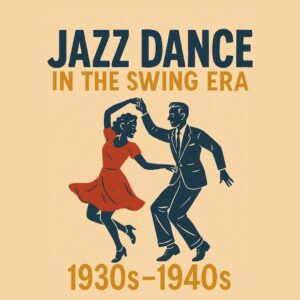
Jazz dance is more than a collection of steps—it’s a living, breathing reflection of history, culture, and human expression. From its African roots and rhythmic work songs to its fusion with European, Latin, and Asian dance traditions, jazz has always been shaped by the people and stories behind it. Understanding these foundations not only deepens our appreciation of the art form but also empowers dancers and choreographers to create with authenticity and intention. As we move forward in this series, we’ll explore how jazz dance stepped into the spotlight in the 1930s, transforming from a cultural movement into a cinematic and theatrical phenomenon.
Sources
Busby Berkeley. Wikipedia. https://fi.wikipedia.org/wiki/Busby_Berkeley
Fred Astaire. Wikipedia. https://fi.wikipedia.org/wiki/Fred_Astaire
Fugitive Slave Act. Wikipedia. Fugitive Slave Act (1850) – Wikipedia
Jumping into Jazz. Third Edition. Minda Goodman Kraines; Esther Pryor. Mayfield Publishing Company.
Minstrel show. Wikipedia. Minstrel show – Wikipedia
Ragtime. Wikipedia. https://fi.wikipedia.org/wiki/Ragtime